By Hamed Kenani
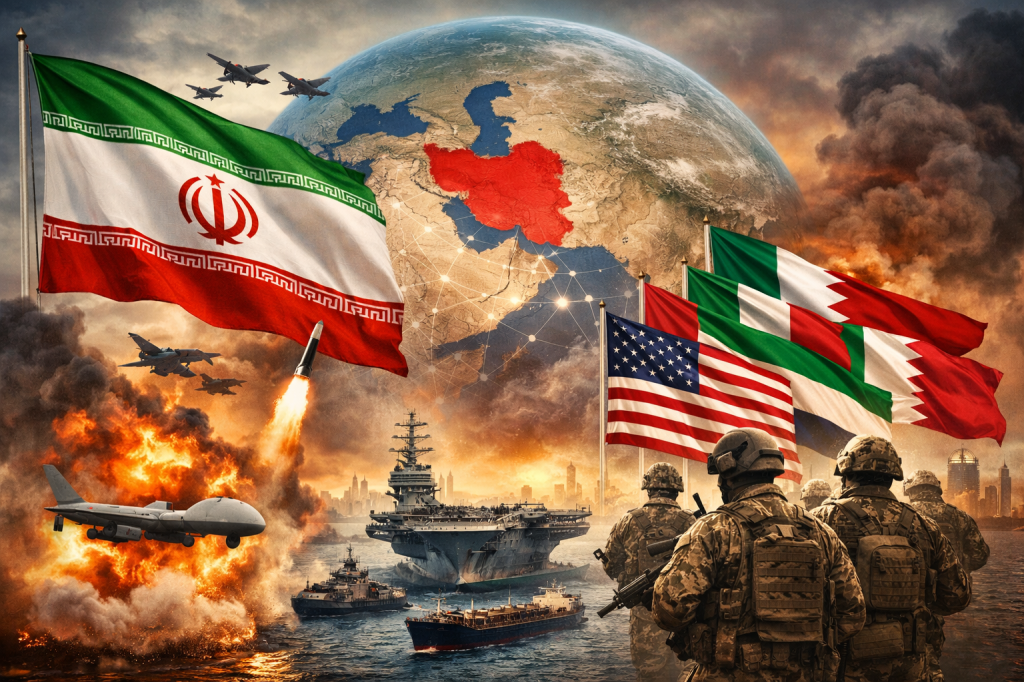
Following the 2015 Iranian nuclear agreement, Iran entered a new phase of openness and international monitoring, as its nuclear file moved from the sanctions list to a defined international supervisory framework. However, recent events, including attacks on Gulf states and the Hashemite Kingdom of Jordan, have brought the Iranian file back into the spotlight of international security concerns, reflecting escalating tensions in the region and the potential formation of international alliances to counter Iran’s increasing threats to regional and global security.
In 2015, after the signing of the Iranian nuclear agreement officially known as the Joint Comprehensive Plan of Action (JCPOA), Iran entered a new phase in its relations with the international community regarding its nuclear program. The agreement between Iran and the six major powers (the United States, the United Kingdom, France, Russia, China, and Germany) aimed to limit the nuclear program in exchange for lifting economic sanctions. Prior to the agreement, Iran’s nuclear program was a subject of the UN Security Council due to previous resolutions, such as 1696, 1737, and 1747, which imposed restrictions on Iran because of its nuclear activities.
استمر في القراءة “Iranian Regional Aggression and Its Security Implications: Prospects for a New International Alliance”
 مركز دراسات عربستان الأحواز- حامد الكناني