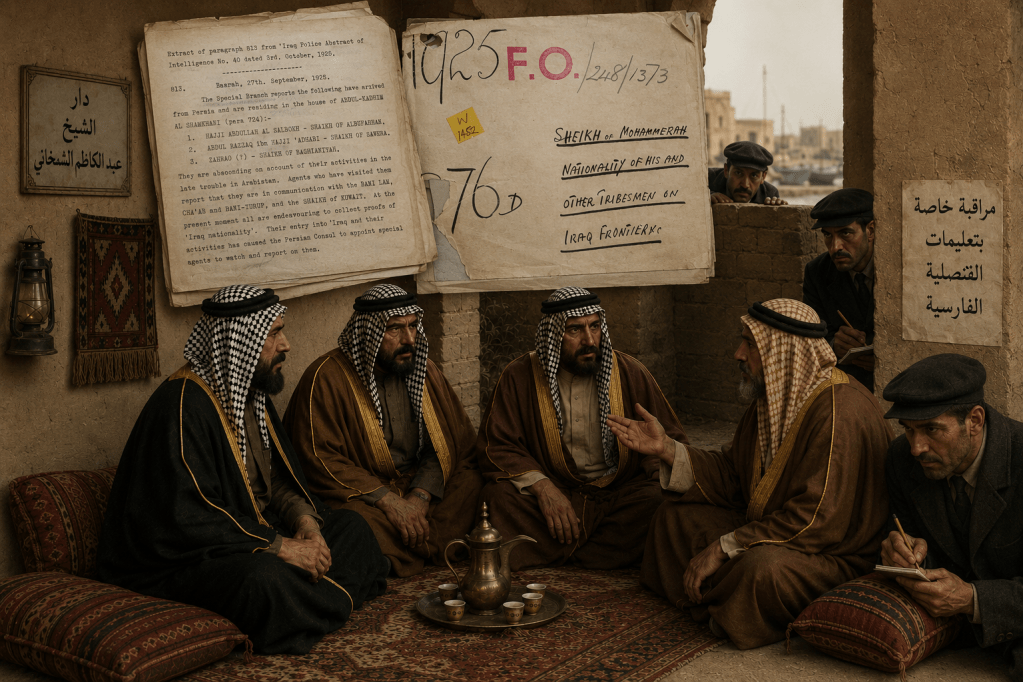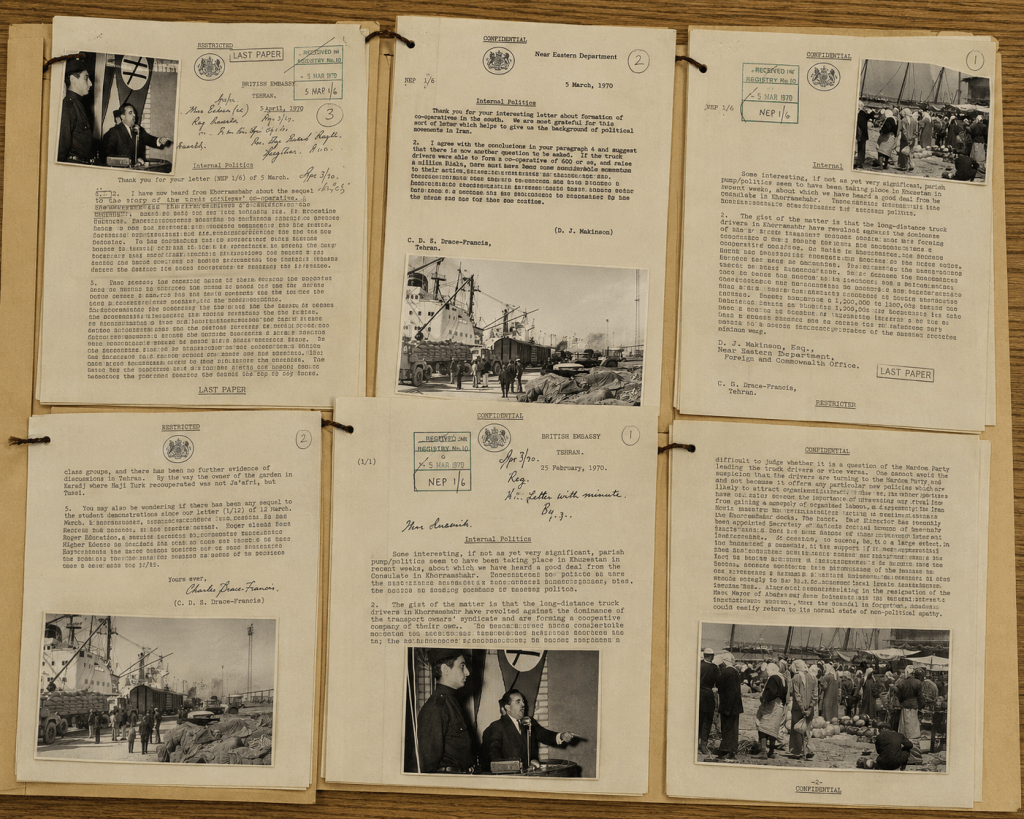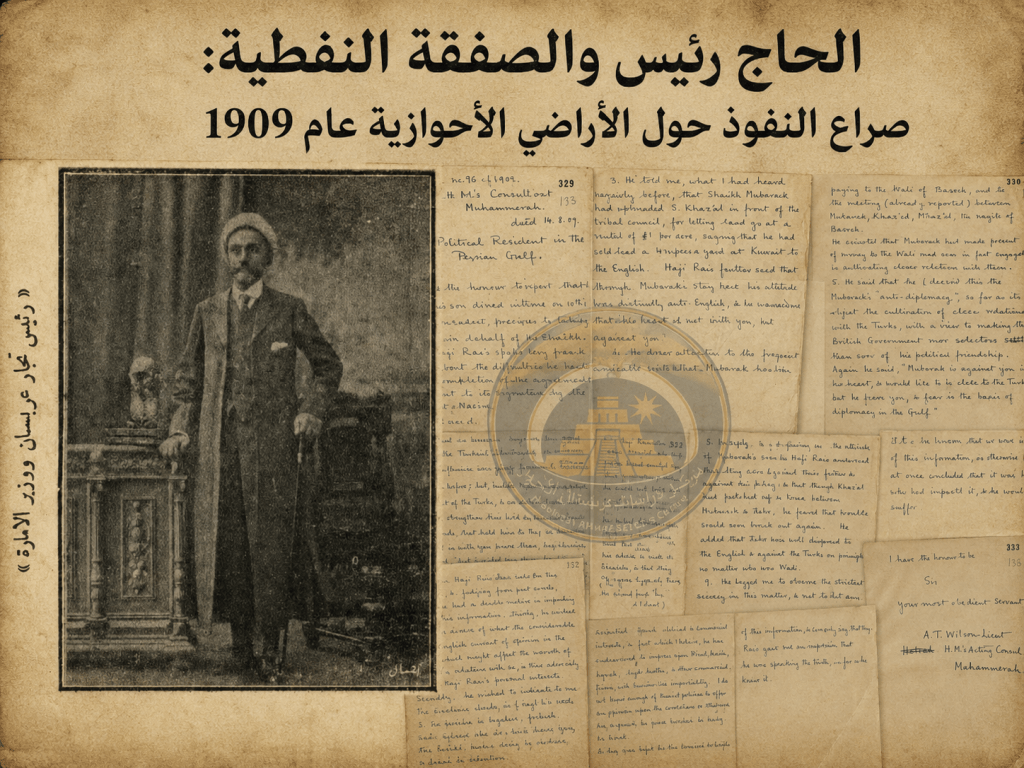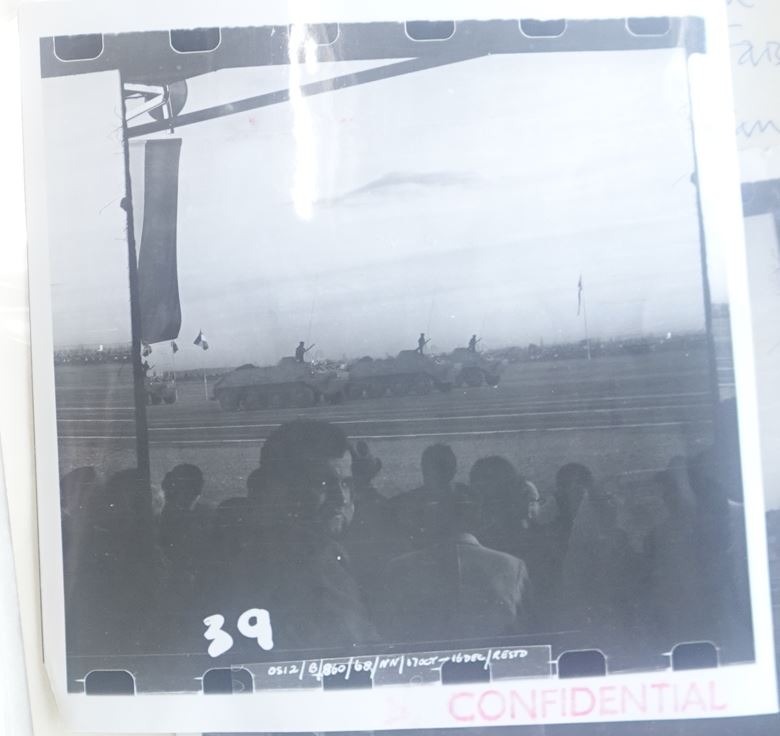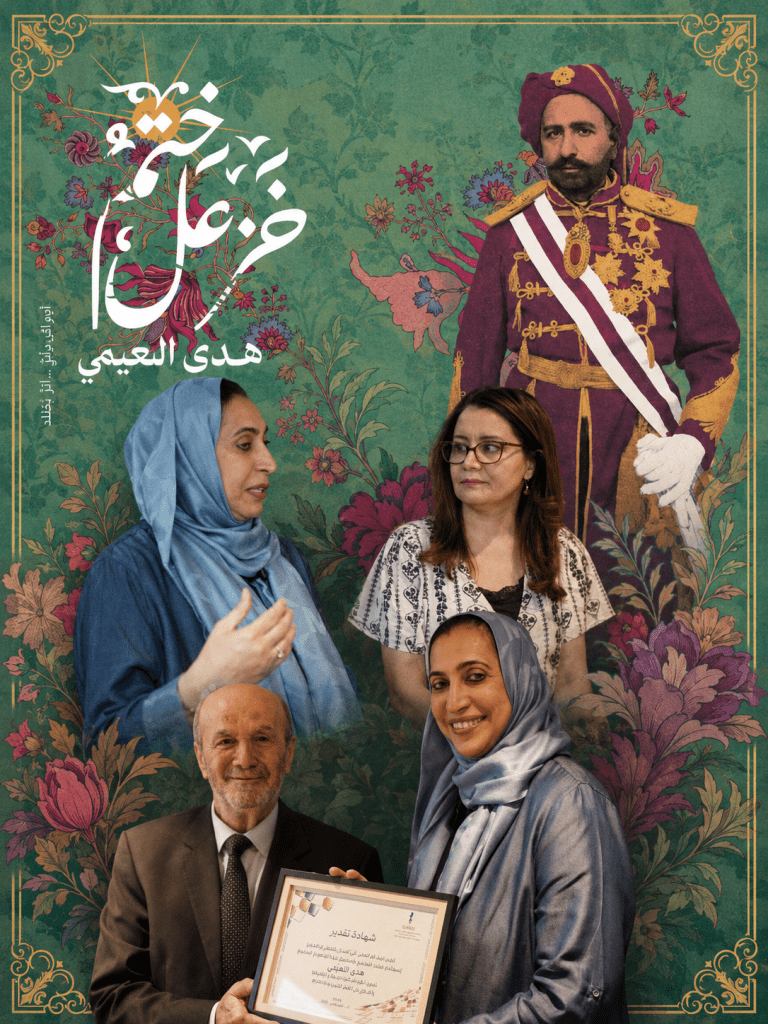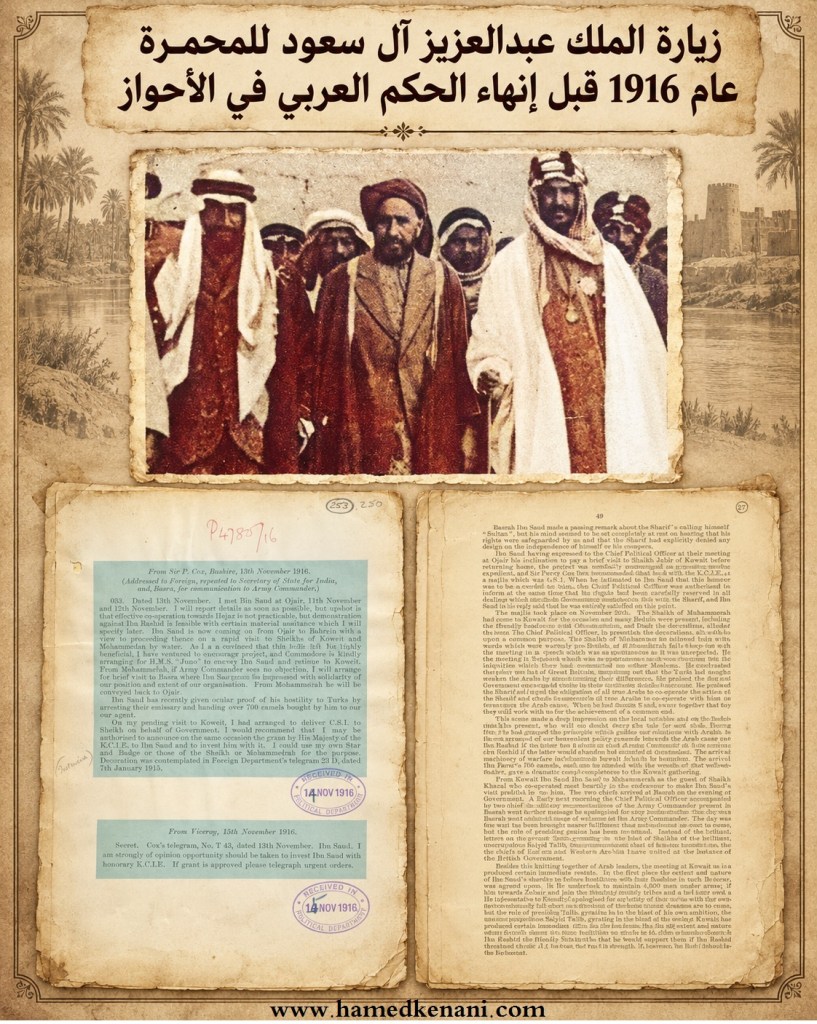
مركز دراسات عربستان الأحواز-حامد الكناني– تُعدّ زيارة الملك عبدالعزيز بن عبدالرحمن آل سعود إلى المحمرة في نوفمبر/تشرين الثاني 1916 محطة مهمة في تاريخ العلاقات السياسية العربية في الخليج، إذ تكشف الوثائق البريطانية المعاصرة عن مكانة المحمرة في شبكة الاتصالات بين الحكام العرب، وعن الدور الذي أدّاه الشيخ خزعل بن جابر في استضافة القيادات العربية والمشاركة في التحركات السياسية التي شهدتها المنطقة خلال الحرب العالمية الأولى.
وتكتسب هذه الوثائق أهمية خاصة عند دراسة تاريخ عربستان الأحواز قبل إنهاء حكم الشيخ خزعل عام 1925؛ فهي تتيح توثيق حضور المحمرة في المجال السياسي الإقليمي، وتوضح أن الشيخ خزعل كان طرفاً في لقاءات وتفاهمات تجاوزت نطاق شؤون إمارته العربية الموروثة إلى العلاقات العربية والخليجية الأوسع.
أولاً: التخطيط البريطاني للزيارة ودلالته السياسية
الوثيقة الأولى: برقية السير بيرسي كوكس، بوشهر، 13 نوفمبر 1916، مع برقية لاحقة مؤرخة في 15 نوفمبر 1916.
تقدم البرقية البريطانية المؤرخة في 13 نوفمبر 1916 دليلاً معاصراً على أن زيارة المحمرة كانت جزءاً من خطة سياسية ودبلوماسية مدروسة. فقد تناولت ترتيبات انتقال الملك عبدالعزيز بحراً لزيارة حكام الكويت والمحمرة، ضمن جولة شملت كذلك الترتيب لزيارة البصرة.
استمر في القراءة “زيارة الملك عبدالعزيز آل سعود للمحمرة عام 1916 قبل إنهاء الحكم العربي في الأحواز/بحث وتدوين: حامد الكناني”